Why Change Fails: Beyond the Buzzwords
 ACTSol and Associates
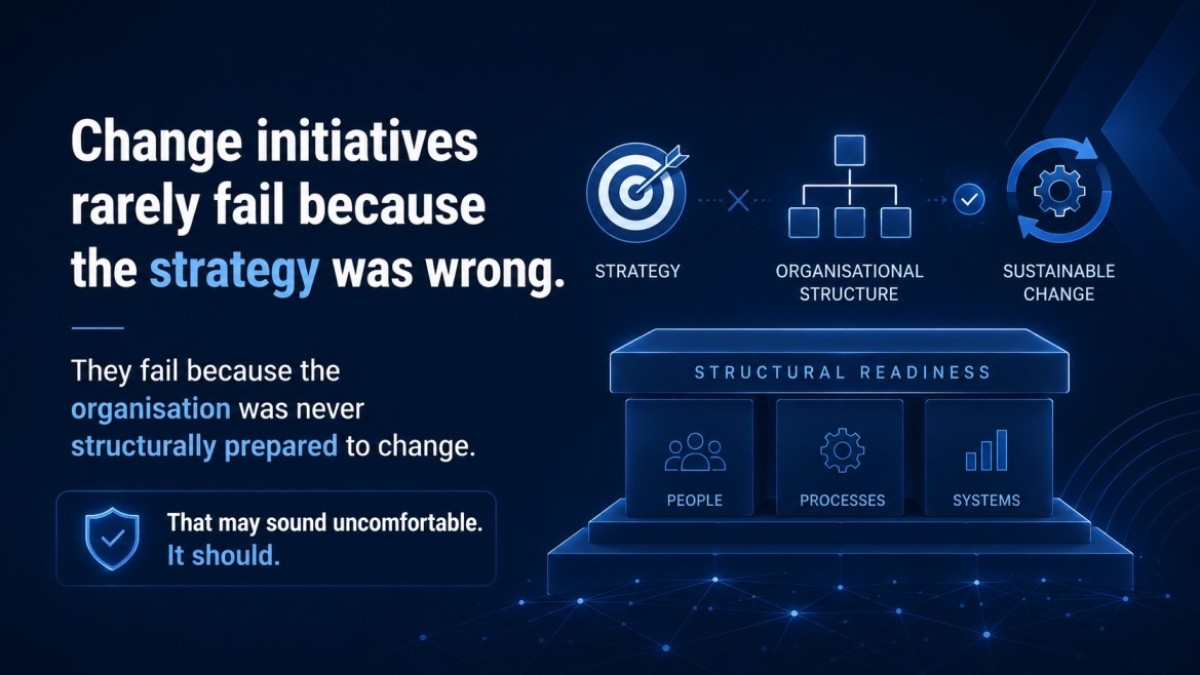
Why change fails beyond buzzwords—structural unreadiness, not “resistant people.”
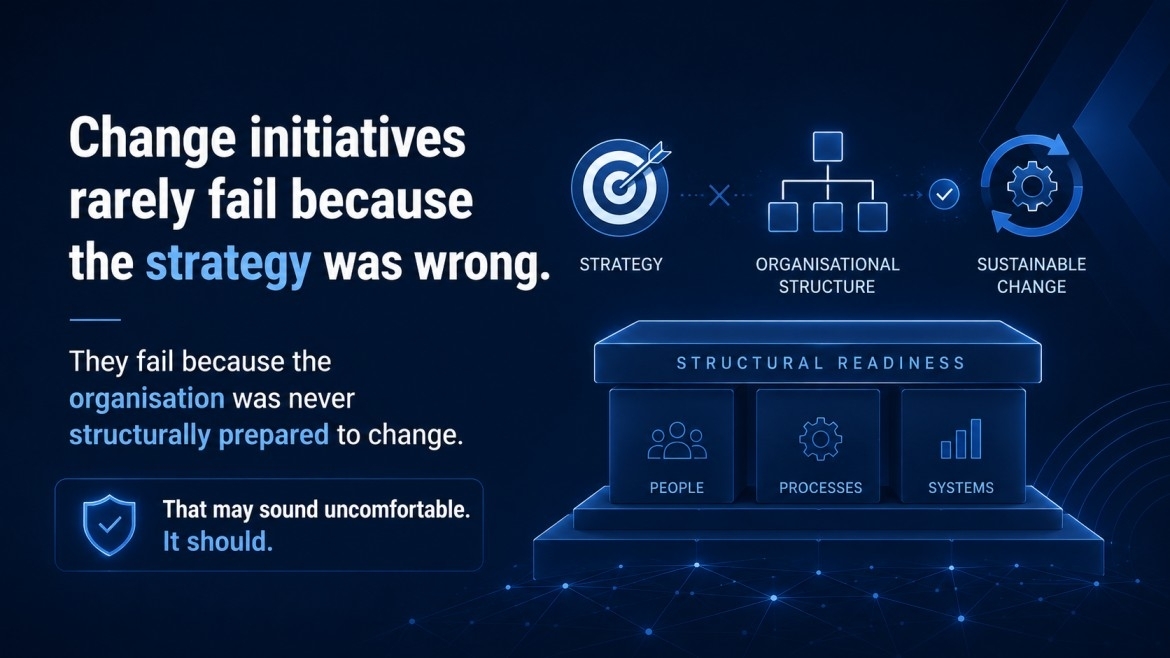
Most change initiatives don’t fail because the strategy was wrong. They fail because the organisation was never structurally prepared to change.
That may sound uncomfortable. It should.
Every year, organisations invest millions in transformation programs, ERP rollouts, digital initiatives, restructuring efforts, culture change agendas, agility programs, AI adoption, mergers, and cost-reduction drives. PowerPoint decks are polished.
Communication plans are launched. Leaders speak confidently about “the journey.”
And yet, quietly, predictably, painfully, the change fizzles out. Not immediately. It dies slowly. Adoption drops. Old behaviours resurface.
Shadow processes reappear. The system technically goes live, but people work around it. Leaders move on to the next priority. Six months later, no one talks about the change anymore, except to explain why it “didn’t quite work here.”
The most dangerous part? Everyone walks away believing the wrong lesson.
- “Our people resist change.”
- “This organisation isn’t mature enough.”
- “The culture isn’t ready.”
- “Execution was the problem.”
These are lazy explanations. And they prevent organisations from ever fixing the real issues.
This article strips away the buzzwords and examines why change actually fails; not at the surface level, but at the structural and behavioural core.
Categories: : Change Impact